
An intro to Applied Behaviour Analysis (ABA)

Applied Behaviour Analysis (ABA) is a system often used to reduce problem behaviour and increased desired or expected behaviour, and is often implemented with students on the Autism spectrum. As the name suggests, the focus is on increasing the desired behaviour, and not reinforcing the problem behaviours.

Photo by Antoni Shkraba on Pexels.com

ABA involves direct observation and measurement of behaviour, analyzing what events or contributing factors happened before the behaviour, and what positive reinforcement or consequences may affect behaviour frequency or intensity. This leads to a fundamental element of ABA: The ABCs of Behaviour

Antecedent: What led up to the behaviour

Behaviour: The actual behaviour being observed

Consequence: What happens after the behaviour

Looking at the before and after of the behaviour we can identify factors that may contribute or minimize the identified behaviour. Once we understand these, we can make adjustments accordingly. For example, some antecedents may be clear triggers that can be reduced or eliminated, thus lessening the behaviour. Or, some consequences may inadvertently reinforce inappropriate behaviour, or may be used to reinforce positive behaviour.

In future posts, we’ll discuss some details and strategies that a student’s learning team may implement and the principles behind the plans.
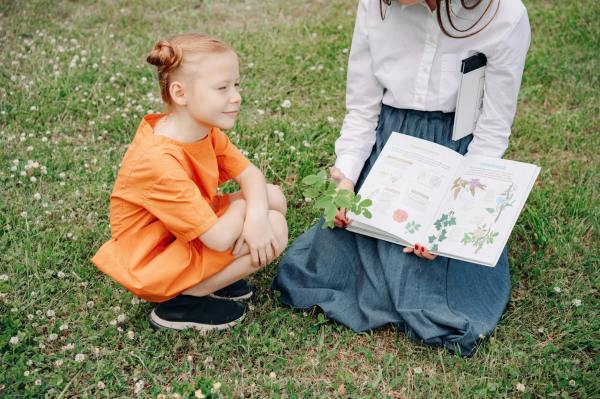
Reflecting on Outdoor Learning Opportunities

For much of the world, an outdoor classroom isn’t really a thing. There are some obvious factors, like weather, accessible spaces, distractions, and safety. However, there are some solid reasons to consider it. While spending over a decade in various schools and classrooms, I have had a somewhat limited exposure to supporting an outdoor learning setting. Here are a few observations.

While students may not yet be conscious of the environmental contributions to their anxiety, students are often more regulated and have lower stress levels outdoors. Many students are sensitive to noise and just can’t work well in certain spaces.

In a recent program at one school I was working at, there was a section of various items like tires, planks of wood, tarps, and so on, that were left outside. My initial reaction was one of concern for safety. However, during the times I occasionally supervised the area, I actually don’t recall anyone being injured from the equipment that was provided. Granted, there were times staff needed to intervene to make sure the children were playing safely. During their time at play there, I observe a great deal of collaboration with other students to build different structures, obstacle courses, and use their creativity and imagination for endless amount of play.

Through my own personal experience studying outdoors, while this setting does come with some distractions, and sometimes a need for more situational awareness than reading in an office or classroom, generally I find myself much more inspired and focused when working outdoors. While I wouldn’t consider myself hyper sensitive to noise or particular lighting conditions, I definitely prefer natural lighting and as much fresh air as I can possibly get.

More opportunities are arising to teach students outdoors in natural environments, where they can use their surroundings to explore and be inspired. In this setting there is more natural light and fresh air, and less walls for classroom sounds to reverberate.

I am excited to dig deeper into such opportunities and see how students are responding to a not-so-conventional classroom environment! A future post will discuss some of the specific pros and cons along with study findings.

Create a website or blog at WordPress.com

Up ↑