Posts

What are salmonberries?

Salmonberries look like a raspberry, but aren’t the same! Salmonberries may have more of a red or yellow colour to them. They are found along the coastal states and provinces of Canada and US. The plant is less thorny than its popular look-alike, the raspberry bush.

Berries can be found from early May to late July and can be made into jams, jellies, and used in baked goods. Indigenous people have used the berries in their diet, and can be eaten with salmon, animal oils, other berries, and the young shoots can be eaten like asparagus. They could even be used to flavour beer and wine! The plant also has medicinal value, too! They can be used to treat diarrhea, and the leaves can be used as an ingredient to treat burns and open sores.

If you ever see salmonberries while spending time in the northwest coastal regions of North America, remember their value, usefulness, and heritage to the local peoples!

What do black bears eat?

Bears actually eat all sorts of things! While we often see pictures of them trying to catch a fish, they are omnivores, which means they don’t just eat meat. Besides catching fish, they also like to eat berries, roots, nuts, insects, and other meat. They aren’t picky and will never turn down an easy meal!

But watch out! If a bear eats human food, they quickly gain a liking for it! So make sure they don’t get into your garbage, and if you go camping, make sure you keep your site clean and food safely stored away in air-tight containers!

Strategies to cope with loss of sight

The news of sight loss can be devastating. But whatever you do, don’t freeze from anxiety! Whether the cause is cataracts, visual defects from birth, glaucoma, macular degeneration, or other causes, planning ahead is vital to maintain a decent quality of living. Here are a few practical strategies to cope with sight loss.

1. Learn as much as possible about your sight loss. This includes the cause, information you would like to ask your doctor about, as well as government agencies helping with transportation and mobility, as well as any tax breaks.

2. Start preparing your home. Color and contrast may assist with navigating around the home. This includes contrasting furniture color with carefully chosen pillow and throw colors and patterns to help you take a seat.

3. No more junk drawers. No time like the present to work on your home organization! Having a consistent home for all your belongings will make the most basic home routines easier.

4. Learn about assistive devices. There is a wide range of tools out there to help with reading and navigating around. Phones, tablets, and computers have various forms of software, including zooming features as well as audio readers. There’s a bit of a learning curve to use these, so don’t be afraid to start early!

5. Professional help is out there. It’s totally understandable that loss of vision can take its toll on mental and emotional help. While short-term bouts of anxiety or depression may result and are understandable, if this becomes a chronic concern, it’s okay to seek professional help.

6. Learn from others who have successfully learned to cope with sight loss. For some, this may mean enlisting help from support groups, while others may be able to seek out ones they know, or learn about ones who have developed successful coping strategies.

7. Prepare for emergencies. It is wise for all of us to prepare for emergencies, regardless of our circumstances. With loss of sight, it would be prudent to re-think emergency situations to make sure you are adequately prepared. Not only that, making sure your go-back or other emergency supplies are easy to get to.

8. Job opportunities. Learn about local and regional resources that can help connect people with low vision to suitable employment. In Canada, CNIB is a valuable resource.

9. Support from family. Whether a child or an adult has low-vision, family is vital support for emotional and practical support.

10. It’s never too early to learn braille. If your doctor has mentioned you will lose your eyesight, while this may be very scary, the course of wisdom would be start planning right away to make the change of circumstances as smooth as reasonably possible. Learning braille is valuable tool to keep learning, navigating, staying connected to the world, and keeping your mind sharp.

Content based on article located here: allaboutvision.com as of 7/26/2024.

Reflecting on Outdoor Learning Opportunities

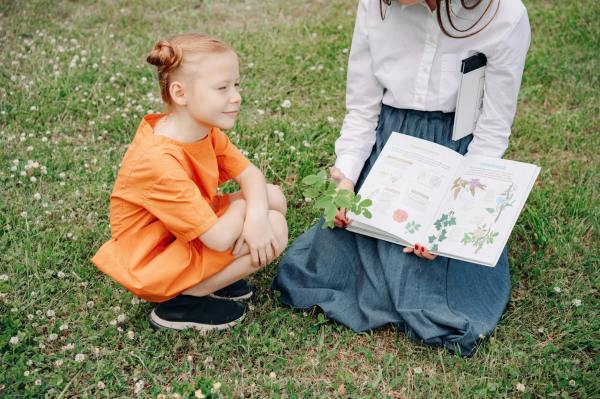
For much of the world, an outdoor classroom isn’t really a thing. There are some obvious factors, like weather, accessible spaces, distractions, and safety. However, there are some solid reasons to consider it. While spending over a decade in various schools and classrooms, I have had a somewhat limited exposure to supporting an outdoor learning setting. Here are a few observations.

While students may not yet be conscious of the environmental contributions to their anxiety, students are often more regulated and have lower stress levels outdoors. Many students are sensitive to noise and just can’t work well in certain spaces.

In a recent program at one school I was working at, there was a section of various items like tires, planks of wood, tarps, and so on, that were left outside. My initial reaction was one of concern for safety. However, during the times I occasionally supervised the area, I actually don’t recall anyone being injured from the equipment that was provided. Granted, there were times staff needed to intervene to make sure the children were playing safely. During their time at play there, I observe a great deal of collaboration with other students to build different structures, obstacle courses, and use their creativity and imagination for endless amount of play.

Through my own personal experience studying outdoors, while this setting does come with some distractions, and sometimes a need for more situational awareness than reading in an office or classroom, generally I find myself much more inspired and focused when working outdoors. While I wouldn’t consider myself hyper sensitive to noise or particular lighting conditions, I definitely prefer natural lighting and as much fresh air as I can possibly get.

More opportunities are arising to teach students outdoors in natural environments, where they can use their surroundings to explore and be inspired. In this setting there is more natural light and fresh air, and less walls for classroom sounds to reverberate.

I am excited to dig deeper into such opportunities and see how students are responding to a not-so-conventional classroom environment! A future post will discuss some of the specific pros and cons along with study findings.

Time and prepositions

We can add more details to talk about time by using prepositions. Here are some examples:

Days or dates: on

I go to the gym on Mondays.
Sally studies English on Fridays.
Ed will visit his grandparents on the weekend.
She will visit the doctor on June 15.

Start and finish points: from/to or between/and

I work from 9pm to 5pm.
I work between 9pm and 5pm.
The bugs come out between dawn and dusk.
The ski resort is open between September and May.

Only a finish point: until

I work until 5pm.
I cannot leave until the teacher comes back.
I will keep eating until I am full.

To talk about how long: for

I have been working for 7 hours.
I have been waiting for an hour to see the doctor.
We lined up for 3 hours to buy tickets for the concert.

To talk about what you did in between,
use during.

I went for a walk during my break.
During summer vacation I went swimming a lot.
I slept well during the flight.

Create a website or blog at WordPress.com

Up ↑