Posts

Linux security updates

Unattended Upgrades can run in the background to keep your Linux machine up-to-date. Here are a few commands to become familiar with.

Update software packages and system components:

$ apt update

Update and upgrades in one command:

$ apt update && apt upgrade -y

Install, enable, and start the service:

$ apt install unattended-upgrades && systemctl enable — now unattended-upgrades

Configuration settings for the file can be located at the file path listed here. Be sure to back up the file if you are making changes. See the reference link at the bottom for more information on the various configuration settings that may suit your particular needs.

/etc/apt/apt.conf.d/50unattended-upgrades

Reference: “Enabling automatic security updates on Linux” posted by Starline,

PXE Boot basic overview

Server prerequisites: Windows Server; DHPC server automatically assigning IP addresses (ensure Options 66 and 67 are set properly); TFTP server for boot images; network switches/routers for PXE boot traffic.

Client prerequisites: Ensure the network interface card (NIC) supports PXE booting; enable network boot in BIOS/UEFI, with priority set to network booting,

Process flow:

On client startup, the computer will request the following through the network card:

  1. A network IP address
  2. A TFTP server address, in order to pull the initial boot file instructions
  3. Bootfile (NBP – Network Bootstrap Program) download, which may be a minimal loader or script for imaging
  4. The bootfile can initiate the OS install, additional scripts, or connection to a management console.

Network security settings: Firewall setting may need to be updated to allow DHCP and TFTP traffic. The PXE boot environment may need to be updated for enhanced security. Tightening up security may involve isolating PXE traffic in its own VLAN; UEFI Secure Boot should be use if/when possible; MAC filters could be applied; updating the DHCP server Access Control List.

Fascinating Corvids! | Workshop

In this free drop-in course, students compared characteristics of ravens and crows. Then, they explored their habitat, behaviour, and intelligence. Gifting is one of the most fascinating behaviours of these birds! Students were able to make connections with corvids near their home and share their own personal experiences. This workshop complemented various common learning outcomes for school-grade science (investigate animals and better understand various habitats).

A History of Trains | Workshop

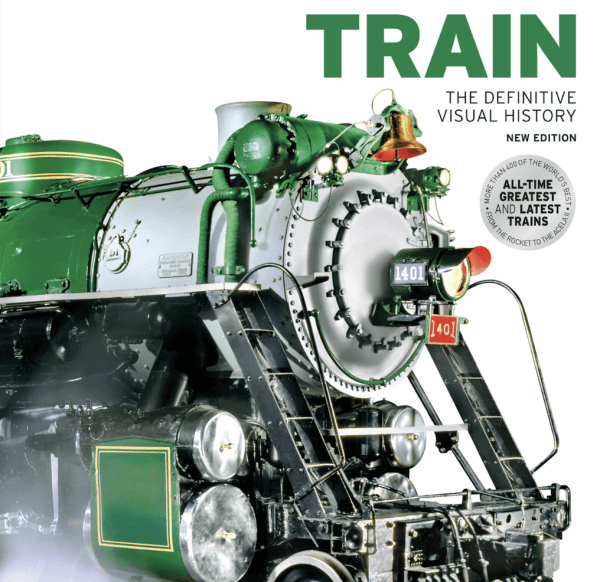
This workshop, offered in 2024/2025, was open to all ages and highlighted fun facts and details throughout the various eras of train and railroad development. The textbook the course was based on, Train – The Definitive Visual History, is rich in visuals and details of hundreds of models.

The course followed the eras as presented in the book, with each workshop in a consecutive drop-in series, with the following topics:

1804-1838: The steam-powered locomotive is invented! The British-made locomotive called The Rocket was highlighted, and its influence on railroading worldwide was discussed.

1839-1869: Tracks tie Eastern and Western USA together, and Britain’s The Tube is born. Steam engines start appearing around the world. Steam engines of note were discussed that appeared during this era.

1870-1894: Steam engines started to look super cool in this era! Different track gauges were in use in Britain. Meanwhile, Canada was connected from East to West and steam engines were being purpose-built for logging, passenger use, and so on.

1894-1913: Did you know electric trains really started taking off in this era? Not only that, passenger cars started looking pretty fancy. The Paris Metro, New York Elevated Railway, and the Trans-Siberian Railway all came to be in this era. As you can imagine, locomotives during this era also were developing rapidly!

1914-1939: This era is super exciting! Locomotive technology was rapidly on the rise. The Orient Express comes to be, and guess what? Thomas the Tank was a real locomotive from this era!  

1940-1959: This era begins to see quite a lot of diversity, with diesel coming on board, as well as the spread of electric trains. We looked at some familiar models like the diesel F7, and also learn some fun facts about one of the world’s most luxurious trains, The Blue Train of South Africa! Oh, and let’s not forget about some famous steam engines, like UP’s 4-8-8-4 Big Boy!

1960-1979: The high-speed passenger train is born! We discussed their development across Japan and Europe.  Also, the first direct passenger train across Australia begins in 1970!

1980-1999: High-speed trains really stay on track now! Lots of new technology! We discussed some familiar diesel models, like the SD-60 seen across North America. Let’s not forget the opulent palace on wheels travelling through India!

2000 onward: Here we see the best of everything emerge — or re-emerge! Steam revival and a revisit to rail as road congestion drives us to look at alternatives to get from A to B.

Grade 8 literature quick note: Satire

What is satire? It is meant to be a humorous form of literature. It aims to criticize people’s lack of judgment, quirks about society, or institutions. As a caution, satire literature, at times, may be offensive or political in nature. So as an example, I’ll use something I’ve slowly grown to love and appreciate over time. It has absolutely no intentions of being either offensive or political in nature — broccoli!

As noted in the feature image, our superhero Brocco Li is saving the day with a caution – broccoli is bad for you… Is this satirical? We might have found three key elements: irony, exaggeration, and parody.

Elements of satire

Irony – expresses the opposite of what is intended to make a point. For example, broccoli is bad for you.

Exaggeration – overstating something. For example, broccoli will give you superpowers.

Parody – a mocking imitation

Create a website or blog at WordPress.com

Up ↑