Origins of Thanksgiving

While many countries will have their individual stories of how Thanksgiving was established locally, many have ancient origins connected with the Egyptians, Greeks, and Romans, where people would feast and show honor to their gods after the fall harvest.

Other cultures that do not have such origins may celebrate a form of thanksgiving also connected with ancient traditions of honoring their gods after harvest. Many Asians and even Native Americans have harvest celebrations of thanksgiving, such as the Mid-Autumn Moon Festival and Vaisakhi, with connections to worshipping their respective deities.
History.com

What are salmonberries?

Salmonberries look like a raspberry, but aren’t the same! Salmonberries may have more of a red or yellow colour to them. They are found along the coastal states and provinces of Canada and US. The plant is less thorny than its popular look-alike, the raspberry bush.

Berries can be found from early May to late July and can be made into jams, jellies, and used in baked goods. Indigenous people have used the berries in their diet, and can be eaten with salmon, animal oils, other berries, and the young shoots can be eaten like asparagus. They could even be used to flavour beer and wine! The plant also has medicinal value, too! They can be used to treat diarrhea, and the leaves can be used as an ingredient to treat burns and open sores.

If you ever see salmonberries while spending time in the northwest coastal regions of North America, remember their value, usefulness, and heritage to the local peoples!

What do black bears eat?

Bears actually eat all sorts of things! While we often see pictures of them trying to catch a fish, they are omnivores, which means they don’t just eat meat. Besides catching fish, they also like to eat berries, roots, nuts, insects, and other meat. They aren’t picky and will never turn down an easy meal!

But watch out! If a bear eats human food, they quickly gain a liking for it! So make sure they don’t get into your garbage, and if you go camping, make sure you keep your site clean and food safely stored away in air-tight containers!

Reflecting on Outdoor Learning Opportunities

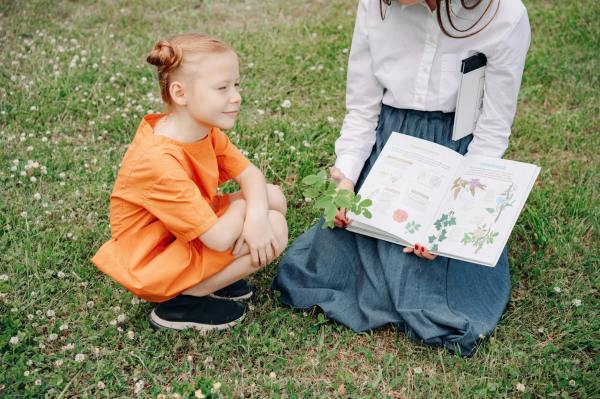
For much of the world, an outdoor classroom isn’t really a thing. There are some obvious factors, like weather, accessible spaces, distractions, and safety. However, there are some solid reasons to consider it. While spending over a decade in various schools and classrooms, I have had a somewhat limited exposure to supporting an outdoor learning setting. Here are a few observations.

While students may not yet be conscious of the environmental contributions to their anxiety, students are often more regulated and have lower stress levels outdoors. Many students are sensitive to noise and just can’t work well in certain spaces.

In a recent program at one school I was working at, there was a section of various items like tires, planks of wood, tarps, and so on, that were left outside. My initial reaction was one of concern for safety. However, during the times I occasionally supervised the area, I actually don’t recall anyone being injured from the equipment that was provided. Granted, there were times staff needed to intervene to make sure the children were playing safely. During their time at play there, I observe a great deal of collaboration with other students to build different structures, obstacle courses, and use their creativity and imagination for endless amount of play.

Through my own personal experience studying outdoors, while this setting does come with some distractions, and sometimes a need for more situational awareness than reading in an office or classroom, generally I find myself much more inspired and focused when working outdoors. While I wouldn’t consider myself hyper sensitive to noise or particular lighting conditions, I definitely prefer natural lighting and as much fresh air as I can possibly get.

More opportunities are arising to teach students outdoors in natural environments, where they can use their surroundings to explore and be inspired. In this setting there is more natural light and fresh air, and less walls for classroom sounds to reverberate.

I am excited to dig deeper into such opportunities and see how students are responding to a not-so-conventional classroom environment! A future post will discuss some of the specific pros and cons along with study findings.


Conduction, Convection, Radiation (grade 3)

Things can warm up or cool down (heat transfer) in three ways: conduction, convection, and radiation. Here is a brief review of which is which!

Conduction: heat transfers through touch, like melting butter in a pan.

Convection: transfers heat through air or liquid currents, like the heat from a blow dryer, or like the heat that comes out of the air vents in a car to warm you up.

Radiation is heat transfer through invisible waves, like the sun warming us up.

Can you think of any examples of heat transfer?

Create a website or blog at WordPress.com

Up ↑